HOSPITALITY INNOVATION

Making Hospitality More Human: The Real Promise of AI in Hospitality is More Time for Human Connection

Share this

Table of Contents

BLOGS May 9, 2026
Making Hospitality More Human: The Real Promise of AI in Hospitality is More Time for Human Connection
Frank Pitsikalis SVP and Chief Marketing Officer

For decades, hospitality leaders have invested in technology hoping to streamline operations and support growth. But the reality is, most organizations are still wrestling with fragmented systems, manual workflows, and disconnected data.

Instead of making things easier, technology has often introduced new layers of complexity, more platforms, more screens, more steps, more decisions, at the exact moment guest expectations are rising.

The result is that teams are busier than ever, but further away from the guest experience that defines true hospitality.

The challenge isn’t that hospitality has become less human. It’s that operational complexity that has pulled people away from the moments where human connection happens. This is where AI has an opportunity to make a meaningful impact.

Hospitality’s Attention Gap

Hospitality has always been built on a feeling. The best guest experiences happen when employees have the time and context to recognize a returning guest, anticipate a need, solve a problem, or create a memorable moment. These interactions build loyalty. They create differentiation. And they can’t be replaced by automation alone.

Today, human attention has become one of the industry’s scarcest resources.

Labor shortages continue to pressure teams. Guest expectations continue to rise. Frontline employees are expected to deliver highly personalized service while juggling increasingly complex operational responsibilities.

Front desk teams have their heads down as they move between systems to answer routine questions and manage arrivals. Restaurant staff balance reservations, waitlists, and service demands during peak periods. Managers spend hours building schedules, coordinating teams, analyzing reports, and responding to issues that pull them away from the floor.

These tasks are necessary. But they are not hospitality. Every minute spent navigating fragmented systems is time taken away from engaging with guests.

The Hidden Cost of Operational Friction

When hospitality leaders discuss service challenges, staffing is often the first topic. But staffing is only part of the equation. Operational friction has become an equally significant barrier to delivering exceptional experiences.

Manual workflows, disconnected systems, repetitive administrative tasks, and information silos create unnecessary work for employees. Individually, these tasks may seem small. Collectively, they slow teams down and limit their ability to focus on what matters most.

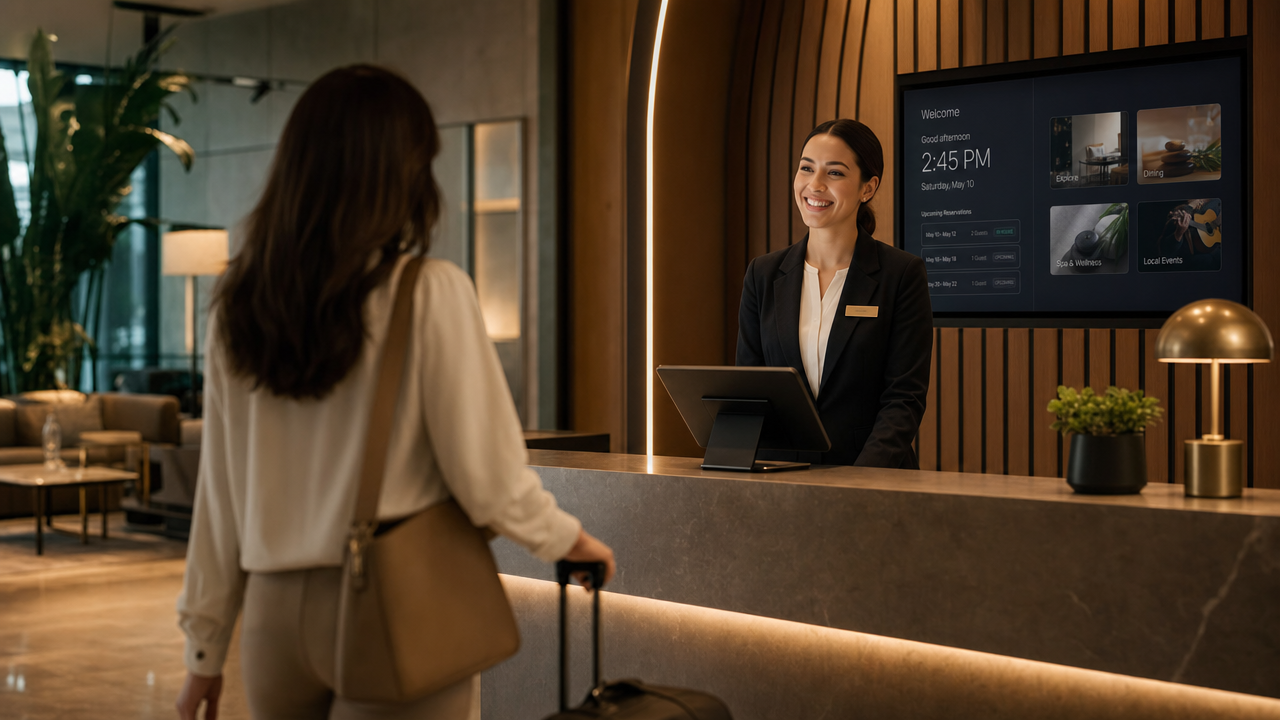
Consider the arrival experience. A guest approaches the front desk after a long day of travel. The employee wants to focus on welcoming them, understanding their needs, and ensuring a smooth start to their stay.

Instead, they may be verifying reservation details, checking loyalty status, reviewing payment information, confirming room readiness, and searching for information across multiple systems. The interaction becomes transactional. The guest feels it. The employee feels it.

The issue isn’t a lack of commitment to service. It’s that operational complexity is getting in the way of great hospitality.

AI’s Most Important Contribution

Much of the conversation around AI has focused on automation and efficiency. Those benefits matter. But the most important contribution AI can make to hospitality is something else entirely: helping teams regain their time and attention.

When applied thoughtfully, AI can take work off employees’ plates before it ever reaches the guest. It can surface relevant guest context before arrival instead of forcing staff to search across systems. It can help employees find answers quickly without breaking focus. It can handle high-volume, routine tasks that do not require empathy, judgment, or personal connection so teams can stay present to surprise and delight in the moments that matter.

For managers, AI can simplify work that often happens after hours and pulls leaders away from their teams, tasks such as scheduling, forecasting, and operational decision-making.

These capabilities matter not because they replace people, but because they empower people to deliver the experiences that guests “feel”—and that is true hospitality.

Technology is at its best when it is almost invisible and doesn’t get in the way. It works silently in the background, removing friction and enabling teams to perform at their best. AI delivers this quiet support without demanding attention of its own.

From Automation to Amplification

The hospitality organizations that will benefit most from AI are not necessarily those that automate the most tasks. They’ll be the ones using AI to amplify their people.

Hospitality is, and always will be, a human business. Guests may appreciate speed and convenience, but what they remember are the interactions that make them feel recognized, valued, and cared for.

No algorithm can replace genuine empathy. No automated workflow can replicate authentic hospitality. But AI can help create the conditions that make those experiences more possible.

By reducing administrative burdens, eliminating unnecessary friction, and making information more accessible, AI enables employees to spend more time doing the work that only humans can do.

A More Human Future

The future of hospitality is not a choice between technology and human connection. It is about using technology to strengthen that connection.

As AI continues to evolve, the most successful hospitality organizations will ask a simple question: How can we use technology to create more meaningful interactions between employees and guests?

The answer won’t be found in automation alone. It will be found in giving employees more time to listen, anticipate, solve problems, and create memorable moments. In other words, it will be found in making hospitality more human. Because the ultimate competitive advantage in hospitality has never been technology. It has always been about delivering great guest experiences, one interaction at a time.

Written By
Frank Pitsikalis
Frank Pitsikalis Frank Pitsikalis drives innovative marketing and product strategies for hospitality technology organizations as SVP & Chief Marketing Officer.
HOSPITALITY INNOVATION

Test Post Making Hospitality More Human: The Real Promise of AI in Hospitality is More Time for Human Connection

Share this

Table of Contents

BLOGS May 9, 2026
Test Post – Making Hospitality More Human: The Real Promise of AI in Hospitality is More Time for Human Connection
Frank Pitsikalis SVP and Chief Marketing Officer

For decades, hospitality leaders have invested in technology hoping to streamline operations and support growth. But the reality is, most organizations are still wrestling with fragmented systems, manual workflows, and disconnected data.

Instead of making things easier, technology has often introduced new layers of complexity, more platforms, more screens, more steps, more decisions, at the exact moment guest expectations are rising.

The result is that teams are busier than ever, but further away from the guest experience that defines true hospitality.

The challenge isn’t that hospitality has become less human. It’s that operational complexity that has pulled people away from the moments where human connection happens. This is where AI has an opportunity to make a meaningful impact.

Hospitality’s Attention Gap

Hospitality has always been built on a feeling. The best guest experiences happen when employees have the time and context to recognize a returning guest, anticipate a need, solve a problem, or create a memorable moment. These interactions build loyalty. They create differentiation. And they can’t be replaced by automation alone.

Today, human attention has become one of the industry’s scarcest resources.

Labor shortages continue to pressure teams. Guest expectations continue to rise. Frontline employees are expected to deliver highly personalized service while juggling increasingly complex operational responsibilities.

Front desk teams have their heads down as they move between systems to answer routine questions and manage arrivals. Restaurant staff balance reservations, waitlists, and service demands during peak periods. Managers spend hours building schedules, coordinating teams, analyzing reports, and responding to issues that pull them away from the floor.

These tasks are necessary. But they are not hospitality. Every minute spent navigating fragmented systems is time taken away from engaging with guests.

The Hidden Cost of Operational Friction

When hospitality leaders discuss service challenges, staffing is often the first topic. But staffing is only part of the equation. Operational friction has become an equally significant barrier to delivering exceptional experiences.

Manual workflows, disconnected systems, repetitive administrative tasks, and information silos create unnecessary work for employees. Individually, these tasks may seem small. Collectively, they slow teams down and limit their ability to focus on what matters most.

Consider the arrival experience. A guest approaches the front desk after a long day of travel. The employee wants to focus on welcoming them, understanding their needs, and ensuring a smooth start to their stay.

Instead, they may be verifying reservation details, checking loyalty status, reviewing payment information, confirming room readiness, and searching for information across multiple systems. The interaction becomes transactional. The guest feels it. The employee feels it.

The issue isn’t a lack of commitment to service. It’s that operational complexity is getting in the way of great hospitality.

AI’s Most Important Contribution

Much of the conversation around AI has focused on automation and efficiency. Those benefits matter. But the most important contribution AI can make to hospitality is something else entirely: helping teams regain their time and attention.

When applied thoughtfully, AI can take work off employees’ plates before it ever reaches the guest. It can surface relevant guest context before arrival instead of forcing staff to search across systems. It can help employees find answers quickly without breaking focus. It can handle high-volume, routine tasks that do not require empathy, judgment, or personal connection so teams can stay present to surprise and delight in the moments that matter.

For managers, AI can simplify work that often happens after hours and pulls leaders away from their teams, tasks such as scheduling, forecasting, and operational decision-making.

These capabilities matter not because they replace people, but because they empower people to deliver the experiences that guests “feel”—and that is true hospitality.

Technology is at its best when it is almost invisible and doesn’t get in the way. It works silently in the background, removing friction and enabling teams to perform at their best. AI delivers this quiet support without demanding attention of its own.

From Automation to Amplification

The hospitality organizations that will benefit most from AI are not necessarily those that automate the most tasks. They’ll be the ones using AI to amplify their people.

Hospitality is, and always will be, a human business. Guests may appreciate speed and convenience, but what they remember are the interactions that make them feel recognized, valued, and cared for.

No algorithm can replace genuine empathy. No automated workflow can replicate authentic hospitality. But AI can help create the conditions that make those experiences more possible.

By reducing administrative burdens, eliminating unnecessary friction, and making information more accessible, AI enables employees to spend more time doing the work that only humans can do.

A More Human Future

The future of hospitality is not a choice between technology and human connection. It is about using technology to strengthen that connection.

As AI continues to evolve, the most successful hospitality organizations will ask a simple question: How can we use technology to create more meaningful interactions between employees and guests?

The answer won’t be found in automation alone. It will be found in giving employees more time to listen, anticipate, solve problems, and create memorable moments. In other words, it will be found in making hospitality more human. Because the ultimate competitive advantage in hospitality has never been technology. It has always been about delivering great guest experiences, one interaction at a time.

Written By
Frank Pitsikalis
Frank Pitsikalis Frank Pitsikalis drives innovative marketing and product strategies for hospitality technology organizations as SVP & Chief Marketing Officer.